What is a product studio? Definition, model and pricing
Product studio: the word is everywhere, the definition nowhere. Here is what the model really covers, how it works, what it costs and who it fits.
Written byFrançois Delporte
PublishedUpdated
Table of contents
01
Definition: what is a product studio
A product studio is a team that designs, builds and evolves software products end to end, as if they were its own. You will also hear digital product studio or software product studio. The difference comes down to one word: ownership. A studio does not just execute a spec, it takes responsibility for the outcome. Product strategy, design, development, launch and iteration are carried by a single team that stays accountable for what ships.
In practice, you show up with a problem (a product to launch, an idea to validate, a roadmap that will not move) and you leave with something running in production. The studio does not sell you hours, it sells you a product that works. That shift in logic, from time billed to result delivered, is what sets the model apart from everything else.
The term stays fuzzy because so many players claim it: agencies rebranding themselves, freelancers teaming up, genuine product studios. The rest of this article is here for exactly that: to draw a clear definition, show how the model works, and help you decide whether it fits you.
On video: startup studio versus product studio, the differences explained.
At Figue, product studio is not just a definition, it is the internal model. Same team, same tech stack, one target: SaaS founders. Every tool we first build for ourselves becomes a product we open to others. Here is what is running today.
That is the most concrete difference between a studio and a vendor: we run the model on our own products before selling it. When we talk about iteration and ownership of the result, we are talking about what we live every week, on our own launches.
02
How it works in practice
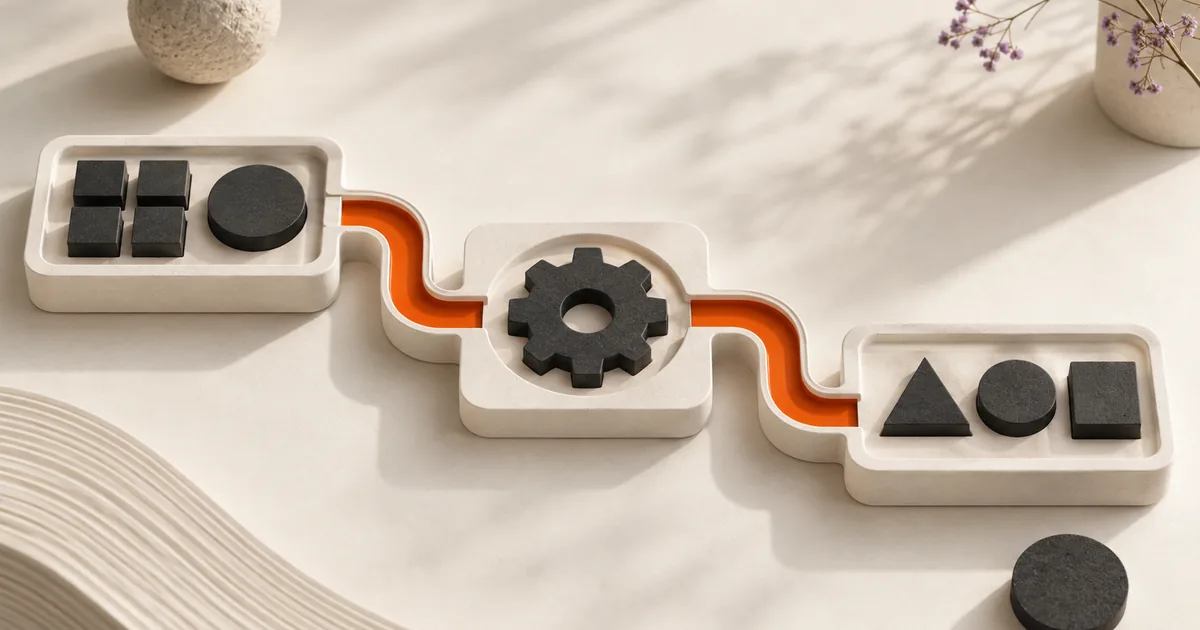
A product studio works like an in-house product team you do not have to recruit. It does not position itself as a subcontractor waiting for specs, but as a partner that helps define the what as much as the how. The exact process varies from one studio to the next, but the underlying logic is almost always the same: frame fast, ship small, iterate often.
Here are the four phases that show up in nearly every engagement.
01
Framing: turning a hunch into a scope
It all starts with a conversation, not a tender. The studio digs into the real problem behind the request, identifies the user, cuts what is not essential and proposes a first shippable scope. The goal is not to build everything, but to find the smallest useful thing worth putting into real hands.
02
Design and architecture: deciding before coding
Once the scope is set, the studio maps the flows and picks a stack that will not lock you in. The structural decisions (data model, core building blocks, dependencies) are made early, because those are the ones that get expensive to undo later. A good studio designs for evolution, not just for the demo.
03
Build: shipping to production, not to a presentation
Development happens in short increments. You watch the product move forward continuously, in a real environment, not in a slide. Every week brings a version real users can touch closer, instead of pushing everything to a final delivery where the problems surface too late.
04
Iteration: measure, adjust, repeat
Launch is not the end, it is the start of learning. You look at what users actually do, fix what breaks, double down on what works. The product takes shape through contact with reality, and the studio's job is to make that loop as short as possible.
“A studio does not deliver a project and walk away. It ships a first version, then stays long enough for the product to find its shape.”
What matters in this flow is not the method on the label, it is the feedback loop. The sooner something real lands in users' hands, the sooner you learn, and the sooner your money works for you. A studio that keeps everything hidden for months is working against that principle.
03
What a product studio actually delivers
Behind the model there is a concrete team, and it is worth knowing who sits in it before signing. A product studio brings together the three roles a product needs to exist: someone who frames and arbitrates the scope, someone who designs the flows and the interface, and engineers who ship to production. On a small engagement, two or three people cover all of it. On a bigger one the team grows, but the principle does not move: one team, one interlocutor, no relay race between a design agency, a dev shop and a freelance product manager.
The deliverable is not a document, it is a product that runs. At the end of a first engagement you should hold a version in production with real users on it, the full source code in a repository you own, the design files, the accounts and accesses of every service the product depends on, and enough documentation for another team to take over. Anything missing from that list is a dependency, not a delivery.
This is also what makes the model readable when you compare offers. Ask what exists at the end of the first month, not at the end of the project. A studio used to shipping answers with a URL and a scope; a vendor used to selling volume answers with a calendar.
04
Who it's for (and who it isn't)
A product studio is for those who have a clear product problem but not the team to solve it in time. The most common case: a non-technical founder who has to launch a credible first version without spending a year hiring a CTO. Next comes the established company that wants to ship a new product on the edge of its core business, without pulling in internal teams that are already full. And finally the funded startup that has to ship fast to keep a promise made to investors or to the market.
What these three profiles share is the stakes: the product genuinely matters, and the calendar leaves no time to build an internal team before starting. The studio fills exactly that gap: product capacity right now, without the months of recruiting.
There is a common in-between case: you do have a technical team, but it is maxed out. There, what you need is not a full studio but senior engineering reinforcement plugged into your team, to absorb a spike without starting from scratch.
So the real question is not just what a studio is, but whether your situation matches what it solves best: a product that matters, a tight calendar, and no internal team ready to carry it today.
05
Product studio, agency and startup studio: the differences in brief
Three models carry similar names and deliver very different services. An agency executes an order: you provide the spec, it delivers the scope, and responsibility ends at conformity. The relationship unwinds when the project ends. That is efficient when you already know exactly what to build, less so when the product has to discover itself along the way.
A startup studio, on the other hand, does not work for you: it creates its own companies in-house, taking a significant equity stake. It is a startup factory model, not a service model. The product studio sits between the two: it works for your product with a studio's standards, but without wanting to become a co-owner. You keep your company, you gain a product team.
The line between agency and product studio deserves more than this summary, because that is where most bad starting decisions are made. We detailed it in our product studio versus agency comparison, with the concrete criteria to decide.
Keep the essential in mind: the word studio guarantees nothing on its own. What matters is the real model behind the word, namely who owns the outcome and how value is billed.
06
How much it costs: the pricing model
A product studio costs more per hour than a freelancer, and less overall than a bad internal team assembled in a rush. Price is not read at the hourly rate, it is read at the result obtained per euro spent. Three main billing models coexist, and the right choice depends mostly on the maturity of your product.
Fixed project pricing fits when the scope is clear and stable: you know what you want, the studio commits to a price. Retainer or monthly subscription fits when the product evolves fast and you want continuous capacity: you pay for an available team, month after month. Finally, some studios work on an energy or capacity model, where you buy a reserve of work that the product consumes across deliveries, without metering every hour.
A good studio is transparent about its model and tells you plainly what is not in the price. Be wary of round quotes with no detail: a price you cannot break down is a price you cannot discuss, and often a scope that was never really framed.
07
How to choose the right product studio
Choosing a studio is not settled by the slickest portfolio, but by concrete signals of how it works. A beautiful site proves it can sell itself, not that it can carry your product. Here are the criteria that separate a real product partner from a vendor that simply repainted its sign.
“The best test before signing: ask how they reacted the last time a product they were building took an unexpected turn.”
In the end, choosing a product studio means choosing a team you would agree to work with every day for six months. Competence is a prerequisite, not a sorting criterion: at that level, what decides is clarity, honesty about constraints and a real will to make your product succeed, not just to ship it.
FAQ
Digital product studio questions
The three things people ask us most about the digital product studio model.
What is a digital product studio?
A digital product studio is a team that designs, builds and ships software products end to end, and stays accountable for the result. Digital only signals that the output is software, a web app, a mobile app or an internal platform, and not a physical object. In practice, digital product studio and product studio describe the same model.
What does a digital product studio do?
It frames the scope, designs the flows, writes the code, puts the product in production, then keeps iterating once real users are on it. A digital product studio also makes the product calls that go with the work: what to cut, what to ship first, what to measure. You leave with a running product, its source code and its design files.
How much does a digital product studio cost?
There is no single rate. A digital product studio bills either a fixed price on a stable scope, a monthly retainer for continuous capacity, or a reserve of capacity consumed across deliveries. Expect a higher hourly figure than a freelancer and a lower total than an internal team hired in a rush. Judge the price on the result per euro spent, delay included.



How it works in practice
A product studio works like an in-house product team you do not have to recruit. It does not position itself as a subcontractor waiting for specs, but as a partner that helps define the what as much as the how. The exact process varies from one studio to the next, but the underlying logic is almost always the same: frame fast, ship small, iterate often.
Here are the four phases that show up in nearly every engagement.
Framing: turning a hunch into a scope
It all starts with a conversation, not a tender. The studio digs into the real problem behind the request, identifies the user, cuts what is not essential and proposes a first shippable scope. The goal is not to build everything, but to find the smallest useful thing worth putting into real hands.
Design and architecture: deciding before coding
Once the scope is set, the studio maps the flows and picks a stack that will not lock you in. The structural decisions (data model, core building blocks, dependencies) are made early, because those are the ones that get expensive to undo later. A good studio designs for evolution, not just for the demo.
Build: shipping to production, not to a presentation
Development happens in short increments. You watch the product move forward continuously, in a real environment, not in a slide. Every week brings a version real users can touch closer, instead of pushing everything to a final delivery where the problems surface too late.
Iteration: measure, adjust, repeat
Launch is not the end, it is the start of learning. You look at what users actually do, fix what breaks, double down on what works. The product takes shape through contact with reality, and the studio's job is to make that loop as short as possible.
What matters in this flow is not the method on the label, it is the feedback loop. The sooner something real lands in users' hands, the sooner you learn, and the sooner your money works for you. A studio that keeps everything hidden for months is working against that principle.